From Lab-Aids: How Mathematical Reasoning Builds Deeper Understanding
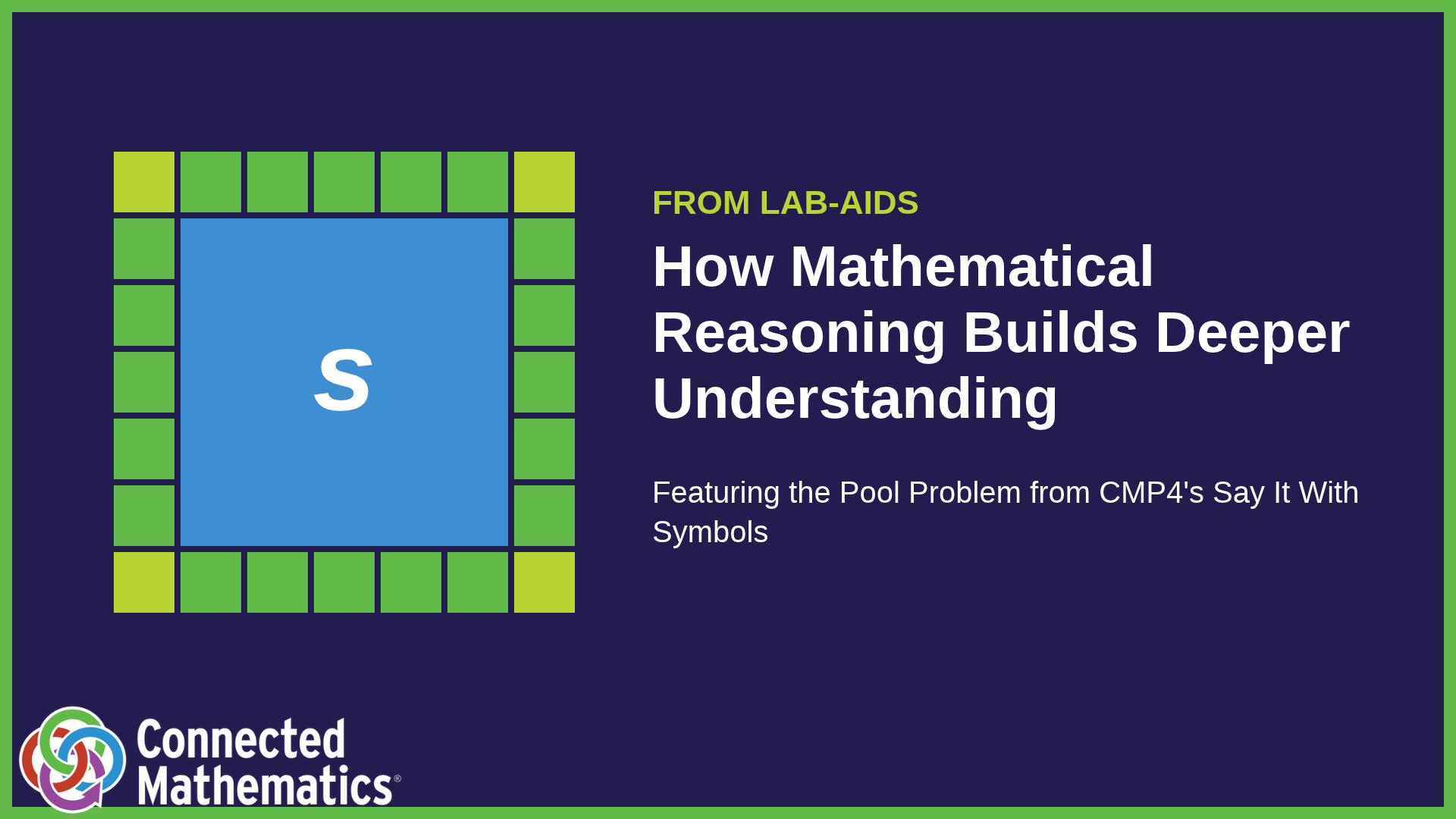
Our publishing partner, Lab-Aids, recently shared a new article on their blog, How Mathematical Reasoning Builds Deeper Understanding. It takes on a question at the heart of Connected Mathematics: what does it really mean for a student to understand the mathematics, not just get the right answer?
The article makes the case that a correct answer is only part of the story. When students explain their reasoning and compare their strategies with classmates, teachers get a clearer window into what students actually understand, and students build connections they can carry into new problems. It also highlights an approach our author team cares deeply about: treating incorrect answers as strategies worth examining, rather than mistakes to be marked wrong. That shift helps students feel safe sharing their thinking, even when they’re unsure.
The piece grounds these ideas in the research behind CMP. Since the project began at Michigan State University in 1990, Connected Mathematics has been the subject of more than 150 articles, 70 dissertations and theses, and 25 evaluation studies, with findings pointing to stronger problem solving, conceptual understanding, and reasoning among CMP students.
Inside a CMP4 Classroom
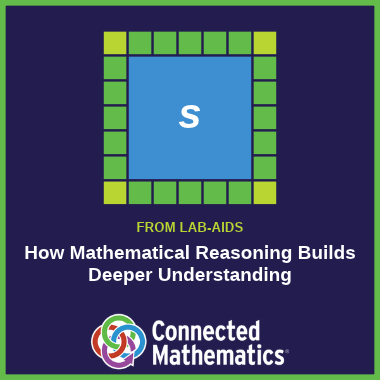
The article also walks through a familiar favorite: the Pool Problem from Problem 1.1, “Tiling Pools,” in the Grade 8 unit Say It With Symbols. Students write expressions for the number of border tiles around a square pool, then work out which of their classmates’ expressions are equivalent, and why one common expression overcounts the corners. It’s a great example of how comparing strategies, diagrams, tables, and graphs leads to a deeper understanding of equivalence.
We’re grateful to Lab-Aids for sharing the thinking behind CMP4 with teachers everywhere. We encourage you to read the full article on the Lab-Aids blog.